
Oracle NetSuite identifies India as one of its highest-priority markets, noting that small businesses, particularly outside major metros, are increasingly leveraging artificial intelligence (AI) and cloud technologies to expand domestically and internationally. This adoption is driven by India's young, tech-native population, which is less burdened by legacy systems, allowing smaller firms to compete more effectively with larger enterprises.
Indian SMBs spent $11.9 billion in 2010 on IT and it is expected to grow to $48.5 billion by 2015.

The cloud market in India is expected to grow by 26% by the end of 2022.

With the approaching deadline to offer complete solution for monitoring of its contents by January 31, BlackBerry maker Research in Motion (RIM) has offered lawful interception in its security architecture through cloud computing from Indian operators.

British born Indian, Sachin Duggal, 27, a World Economic Forum 2009 technology pioneer, says that a major part of the battle he and his cloud computing company Nivio fight is in fact 'unclouding' the concept itself. "Part of our challenge is educational. We are trying to explain what we are about."

Cloud computing is helping corporations create new, cost-effective business models

India's second largest software exporter Infosys Ltd is eyeing big opportunities in cloud computing but advocates that there is need to put in place a policy framework for the same.

Cortex DC, a company of The Chatterjee Group (TCG), announced its entry into the data centre market with plans to develop 2 GW of AI-ready capacity across India over the next seven years. The initiative aims to meet the growing demand for high-performance computing, targeting hyperscalers, cloud service providers, and advanced AI workloads with a focus on speed, scale, and sustainable power.

Oracle has partnered with the Uttar Pradesh State Skill Development Mission (UPSDM) to provide free digital skills training in AI, cloud, cybersecurity, and data science to 300,000 students and professionals by 2029, aiming to enhance employability and build a future-ready workforce.
The potential of cloud to transform business enterprises is increasing as cloud computing gains traction with a variety of organisations and user groups across the globe.

Jio Platforms Ltd's (JPL) public offer, valued at Rs 30,213 crore, was fully subscribed within 100 minutes of opening, making it the fastest-ever subscribed IPO in India, driven by strong institutional demand.

The project involves building a network around a dozen secured centres, each priced at pound 250 mn.

Most of the companies AI models and AI agents targeted had no idea their networks had been breached.

Bharti Airtel's homegrown cloud platform, Airtel Cloud, has acquired approximately 40 customers within a year of its launch, with a significant portion coming from the manufacturing sector. The platform, designed for Indian companies, offers sovereign, telco-grade cloud infrastructure, connectivity, and GenAI-based provisioning, addressing the growing demand for secure, India-hosted data solutions, particularly for sensitive workloads and regulated sectors.

Infosys co-founder Nandan Nilekani has dismissed fears that artificial intelligence will lead to job losses in India's IT services sector, calling such concerns "hogwash" and "disaster marketing." Speaking at the Bloomberg New Economy Forum 2026, Nilekani argued that AI will actually increase demand for IT firms as it necessitates complex business transformations and creates new types of jobs, particularly in small businesses.
The application is fast catching on with internet users in India.
Globally, the music industry will now have to deal with content's privacy on cloud services such as iCloud. But Indian companies are putting up a brave face.

Anthropic has formally warned investors that its technology may pose "existential risks to humanity" in a long-awaited initial public offering prospectus circulated with a small group of partners in recent days.

Total cloud market in India, now at $400 million, is expected to reach a market value of $4.5 billion by 2015.

Adani Enterprises and US-based Jabil have signed a non-binding agreement to establish a 50:50 joint venture in India. This JV will manufacture artificial intelligence and data centre equipment, including AI racks, servers, storage, networking gear, and cooling systems, targeting both Indian and global markets. The collaboration aims to capitalise on India's accelerating data centre demand and the surging global investment in AI compute infrastructure.
The benefits of Cloud Computing are innumerable and difficult to ignore. However, the various legal and security issues still need to be wrangled with.

India's AI startups have the money to run their models, but a shortage of GPUs is delaying projects, increasing costs and limiting growth.

Jio Platforms Ltd's Rs 30,213-crore initial public offering was subscribed 3.01 times, attracting approximately Rs 66,500 crore in public bids, with qualified institutional buyers oversubscribing their portion by 9.02 times, while retail investor demand remained under-subscribed at 0.68 times.

The Standing Committee on Information Technology will review 17 critical subjects, including social media regulation, AI safety, deepfakes, cybersecurity, and the semiconductor ecosystem, during 2026-27. This comprehensive review aims to address growing concerns around digital platforms, AI misuse, and infrastructure development, with India's cybersecurity agency already issuing warnings about AI-driven threats.

Amazon CEO Andy Jassy announced an additional USD 13 billion investment in India, bringing the company's total capital commitment to USD 48 billion by 2030. This significant investment will primarily focus on expanding AI and cloud infrastructure, supporting job creation, boosting e-commerce exports, and digitising small businesses, aligning with India's growing digital economy.

Mukesh Ambani fought back tears as his three children, Akash, Isha, and Anant Ambani, took the stage at the stock market listing of Jio Platforms Ltd, marking an emotional moment that signals the next generation's readiness to lead one of India's largest corporate empires.
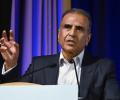
Bharti Airtel is strategically shifting its focus towards data centres, cloud services, and financial services as key drivers for its next phase of growth, leveraging significant past investments in digital infrastructure, as outlined by Chairman Sunil Mittal in the company's Annual Report for 2025-26.
India has launched three indigenous AI foundation models, EKA-1, Dhir 2B, and Dhir 5B, under the IndiaAI Mission. Developed by Soket Labs Technology and Research and ZenteiQ AiTech Innovations, these models aim to enhance India's technological and strategic autonomy in artificial intelligence, offering solutions for various sectors including banking, cybersecurity, defence, and government services, with a focus on Indian languages and offline capabilities.
India is ranked as a "Rising Contender" in AI by Boston Consulting Group (BCG), indicating high readiness but lower disruption exposure. The report highlights India's strength in its large pool of AI specialists and IT-services workforce. While not yet an "AI Pioneer," India is leveraging its talent advantage, with government initiatives like Yuva AI for ALL and IndiaAI FuturesSkills aiming to upskill citizens and broaden access to AI education. The report emphasizes that execution and talent deployment are crucial for economies to gain ground in AI.
Global semiconductor giant AMD projects the overall market for compute infrastructure, driven by artificial intelligence, to reach USD 2 trillion by 2030 from USD 365 billion in 2025. The company unveiled new products and its Helios AI infrastructure, emphasising an open ecosystem and significant performance gains over competitors, with India playing a key role in its global rollout.
Global semiconductor giant AMD projects the overall market for compute infrastructure, driven by artificial intelligence, to reach USD 2 trillion by 2030 from USD 365 billion in 2025. The company unveiled new products and its Helios AI infrastructure, emphasising an open ecosystem and significant performance gains over competitors, with India playing a key role in its global rollout.

Jio Platforms' Managing Director Akash Ambani has outlined an ambitious vision for the company's future, vowing to take it to new heights of growth and excellence while democratising technology across India, including space-based connectivity, following its blockbuster initial public offering.
Preeti Lobana, Google India VP, stated on Wednesday that Google views AI as an "economic equaliser" and a democratic technology. Speaking at Google Cloud Day, she highlighted AI's potential to empower businesses, especially SMEs, in India's journey towards Viksit Bharat 2047. Google has committed USD 15 billion to scale India's digital and AI infrastructure, including an AI hub in Visakhapatnam, to support the IndiaAI Mission.

The Union Budget on Sunday proposed a tax holiday till 2047 for foreign companies that provide cloud services to customers globally using data centres located in India, signalling the government's push to make the country a major hub for AI and digital infrastructure.
The Union Budget on Sunday proposed a tax holiday till 2047 for foreign companies that provide cloud services to customers globally using data centres located in India, signalling the government's push to make the country a major hub for AI and digital infrastructure.

IIT Guwahati researchers have developed SH²RFSSM, a model inspired by how biological neurons communicate.

Jio Platforms Ltd's Rs 30,213-crore initial public offering (IPO) has garnered bids worth Rs 3.73 lakh crore, achieving a subscription rate of 5.57 times the shares on offer, driven by robust institutional and anchor investor demand.

'The Indian market has struggled over the past two years.' 'It peaked in September 2024, and although it has moved up and down since then, investors have not really made money.'

'Cybersecurity preparedness is very weak.'

US intelligence agencies have reportedly concluded that Alice Huang, a Chinese businesswoman with close ties to Nvidia CEO Jensen Huang, was a Chinese intelligence asset. She is accused of funnelling information to Beijing and helping China circumvent US AI chip restrictions. China has dismissed these allegations as a "smear". The findings raise concerns about potential access to sensitive information regarding US-China relations and Nvidia's technology.
